The largest ingredient in VapoCept, explained: what glucosamine is, what the sulfate potassium chloride form is, where supplement glucosamine comes from, and what the NIH LiverTox database says about it.

Editorial disclosure: vapoceptguide.com is an independent guide and is not the manufacturer, distributor or seller of VapoCept. It contains affiliate links, and we may earn a commission if you purchase through them, at no extra cost to you. These statements have not been evaluated by the Food and Drug Administration. VapoCept is not intended to diagnose, treat, cure, or prevent any disease. Consult a healthcare professional before use.
Glucosamine is an amino sugar and, as the NIH LiverTox database describes it, a natural component of cartilage. In supplements it is sold in several salt forms. "Glucosamine sulfate potassium chloride" is glucosamine sulfate combined with potassium chloride, and it has its own monograph under that name in the United States Pharmacopeia–National Formulary. The "D-" in front of the name on the VapoCept label refers to the natural form of the sugar.
LiverTox notes that glucosamine in commercial supplements is usually prepared from the exoskeletons of shellfish or from fermentation of grain.
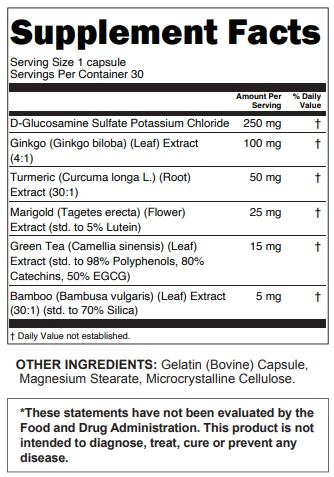
The form and the amount. The VapoCept label lists "D-Glucosamine Sulfate Potassium Chloride" at 250 mg and does not say which source was used.
Because the source is not on the label, ask the distributor before ordering: contact@customercs.com or +1 (507) 448-8190.
LiverTox, the NIH database on supplements, herbs and medicines and the liver, describes the side effects of glucosamine as uncommon and mild, such as abdominal discomfort, nausea, fatigue and headache. It notes that glucosamine has been mentioned in isolated case reports, that the role of glucosamine itself in those reports has not been shown, and that liver injury due to glucosamine must be very rare if it occurs at all.
The VapoCept label adds its own caution for pregnant or nursing mothers, under-18s and anyone with a known medical condition: consult a physician first. If you take medicine, check with a doctor first.
250 mg of the 445 mg of actives in each capsule, a little over half. The other five ingredients are ginkgo, turmeric, marigold, green tea and bamboo extracts; the full panel is on the VapoCept ingredients page.
The label's serving is one capsule a day with an 8 oz glass of water, so 250 mg is the daily amount of glucosamine from VapoCept.
Glucosamine sulfate combined with potassium chloride, one of the salt forms in which glucosamine is sold. It has its own monograph under that name in the United States Pharmacopeia–National Formulary.
Often, but not always. NIH LiverTox says supplement glucosamine is usually prepared from the exoskeletons of shellfish or from fermentation of grain. Check the label or ask the seller.
The VapoCept label does not say. Ask the distributor at contact@customercs.com before ordering if you avoid shellfish.
NIH LiverTox describes its side effects as uncommon and mild, and liver injury due to glucosamine as very rare if it occurs at all. Check with a doctor first if you take medicine.
250 mg of D-glucosamine sulfate potassium chloride per capsule, the largest amount on the label.
Each VapoCept capsule pairs 250 mg of glucosamine with ginkgo, turmeric, marigold, green tea and bamboo extracts. The packs, the guarantee and how to order are in the VapoCept buying guide.
Go to the VapoCept Order PageThis site uses Google Analytics cookies to count visits. See the privacy policy.